Preferred Sample Type
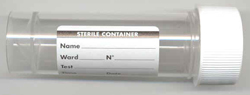
Suitable Specimen Types
- Plain Spot Urine
Specimen Transport
Analysis is only available during normal working hours (Monday-Friday, 9-5 pm).Sample Processing in Laboratory
Take to specialist testing lab (QE) immediately.Sample Preparation
Usual
Turnaround Time
2 working daysSample Stability
Please, dipstick urine before sending to exclude glycosuria and infection. Unaffected urine is stable up to 24 hours at room temperature, up to 7 days refrigerated.Urine pH
General Information
Analysis of urine pH provides an accurate measure of the hydrogen ion concentration [H+] in a sample. Excretion of H+ in urine is key in the regulation of the body’s acid-base balance.
Acid-base disorders are primarily investigated using blood gas analysis of pH, bicarbonate, electrolytes and gases (e.g. pCO2). Urine pH can help to determine the cause of metabolic acidosis, particularly in distinguishing distal renal tubular acidosis (RTA; pH >5.5) from proximal RTA (pH <5.5). Urine pH may also be the investigation of metabolic stone formation.
Urine pH should only be requested by renal specialists requiring accurate measurement. Alternatively, dipstick analysis can be used to assess urine pH.
Patient Preparation
Freshly collected random urine sample, suggested early morning/fasted to reduce dietary interference.
For investigation of metabolic acidosis, concurrent blood gas analysis is recommended.
Reference Range
No reference range is reported for urine pH as measurement can be affected several different factors.
General diet and recent food consumption can cause changes to urine pH. Presence of glucose in the urine (glycosuria) can increase the acidity of urine due to metabolism by microorganisms. Urinary tract infection can cause urine to become either more acidic or alkaline, depending on the type of bacteria present.
Specifications
- EQA Scheme?: Yes
- EQA Status: UK NEQAS for Urine Chemistries