Preferred Sample Type
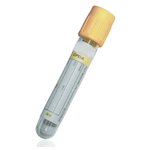
Suitable Specimen Types
- Serum
Sample Processing in Laboratory
Usual
Sample Preparation
Usual
Turnaround Time
7 daysSample Stability
4oC
Allergen Specific IgE
General Information
Specific IgE antibodies cannot prove or exclude allergy and should not be used for screening. Each test should be requested and interpreted on the basis of clinical history (i.e. typical allergy symptoms occurring soon after exposure to the suspected allergen). Consider discuss or refer with UHB Allergy team if clinical history and results do not correlate.
Please refer to our Clinical Pathways Resource Hub (https://www.birminghamsolihull.icb.nhs.uk/application/files/7817/5576/8133/Allergy_Flow_V6_22.07.2025.pdf) to learn more about local clinical guidance for allergy.
Patient Preparation
None
Reference Range
Allergen specific IgE is reported as a quantitative concentration in kUA/L. Historically, results have also been assigned a RAST grade based on the measured concentration, as outlined below.
- Grade 0 = <0.35 kUA/L
- Grade 1 = 0.35 - 0.7 kUA/L
- Grade 2 = 0.7 - 3.5 kUA/L
- Grade 3 = 3.5 - 17.5 kUA/L
- Grade 4 = 17.5 - 52.5 kUA/L
- Grade 5 = 52.5 - 100 kUA/L
- Grade 6 = >100 kUA/L
RAST grading is provided for reference only and is no longer routinely reported. Results should be interpreted using the quantitative specific IgE concentration, in conjunction with the patient's clinical history and relevant exposure.
Source of Reference Range
PRU handbook in Clinical Immunochemistry . A.Milford Ward. J.Sheldon et al 9th edition. 2007Specifications
- EQA Scheme?: Yes
-
EQA Status:
UK NEQAS for Specific IgE